Cornish House
Three homes gathered around a shared courtyard, shaped by the stone, slate and hedges of the Cornish landscape.
The starting point for the design was not a particular architectural style, but the way buildings sit within the landscape here. Across Cornwall, houses, farms and outbuildings have a quiet solidity to them: thick walls, deep openings, weathered materials and roofs that seem to grow out of the ground.

The site is bounded by a network of historic Cornish hedges, some of which are listed. Built up over generations, their substantial dry-stone faces are softened by layers of earth, moss and vegetation.


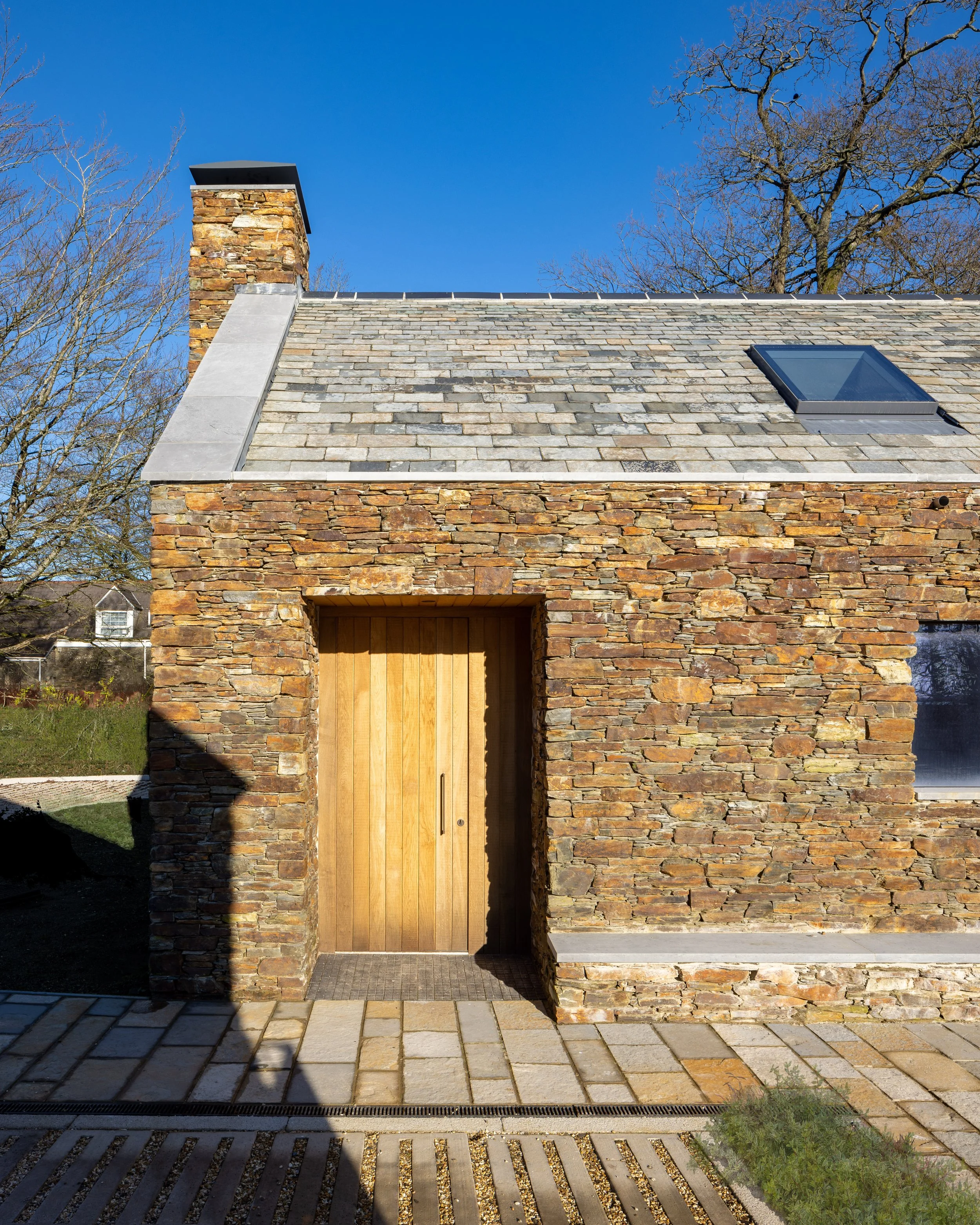
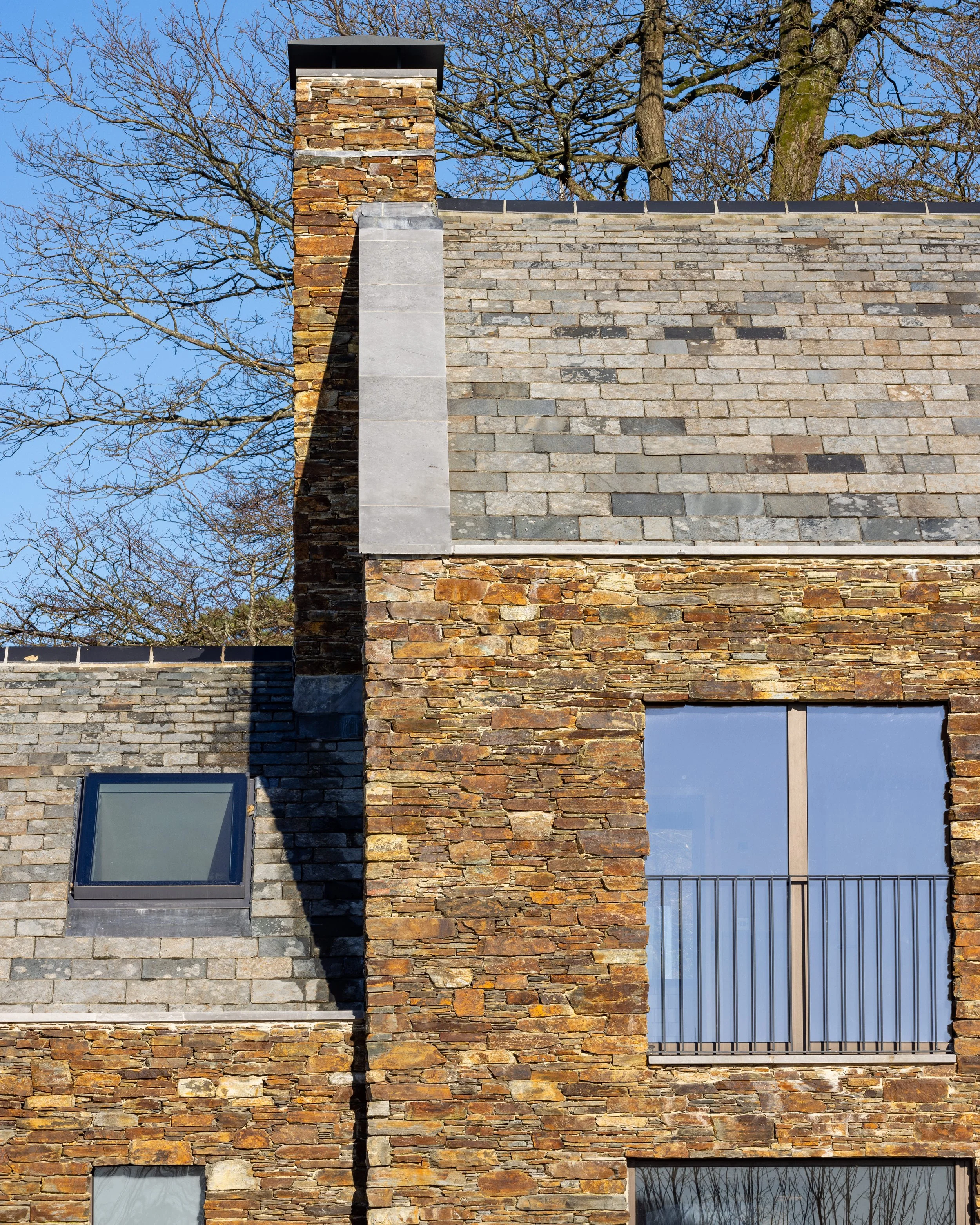
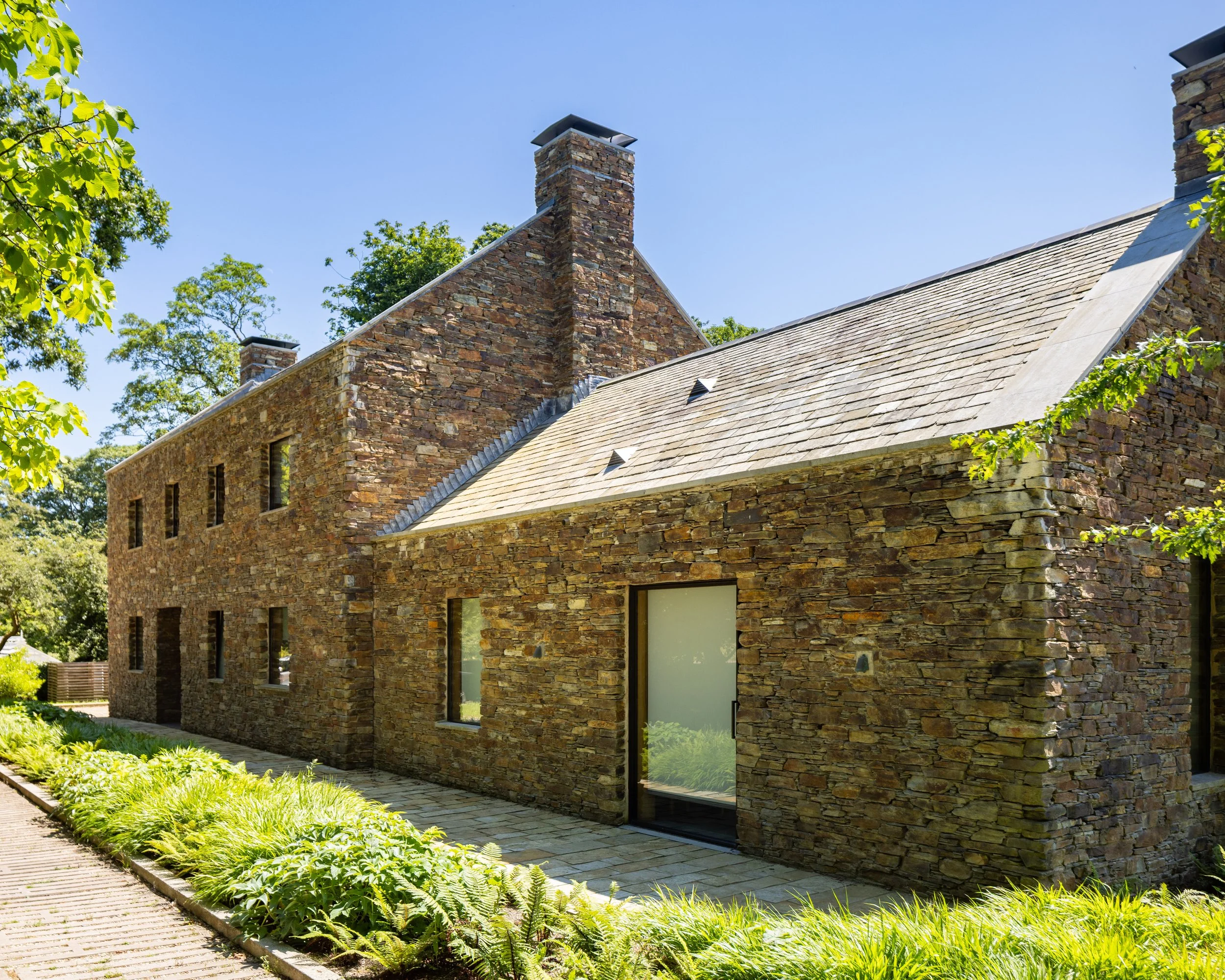
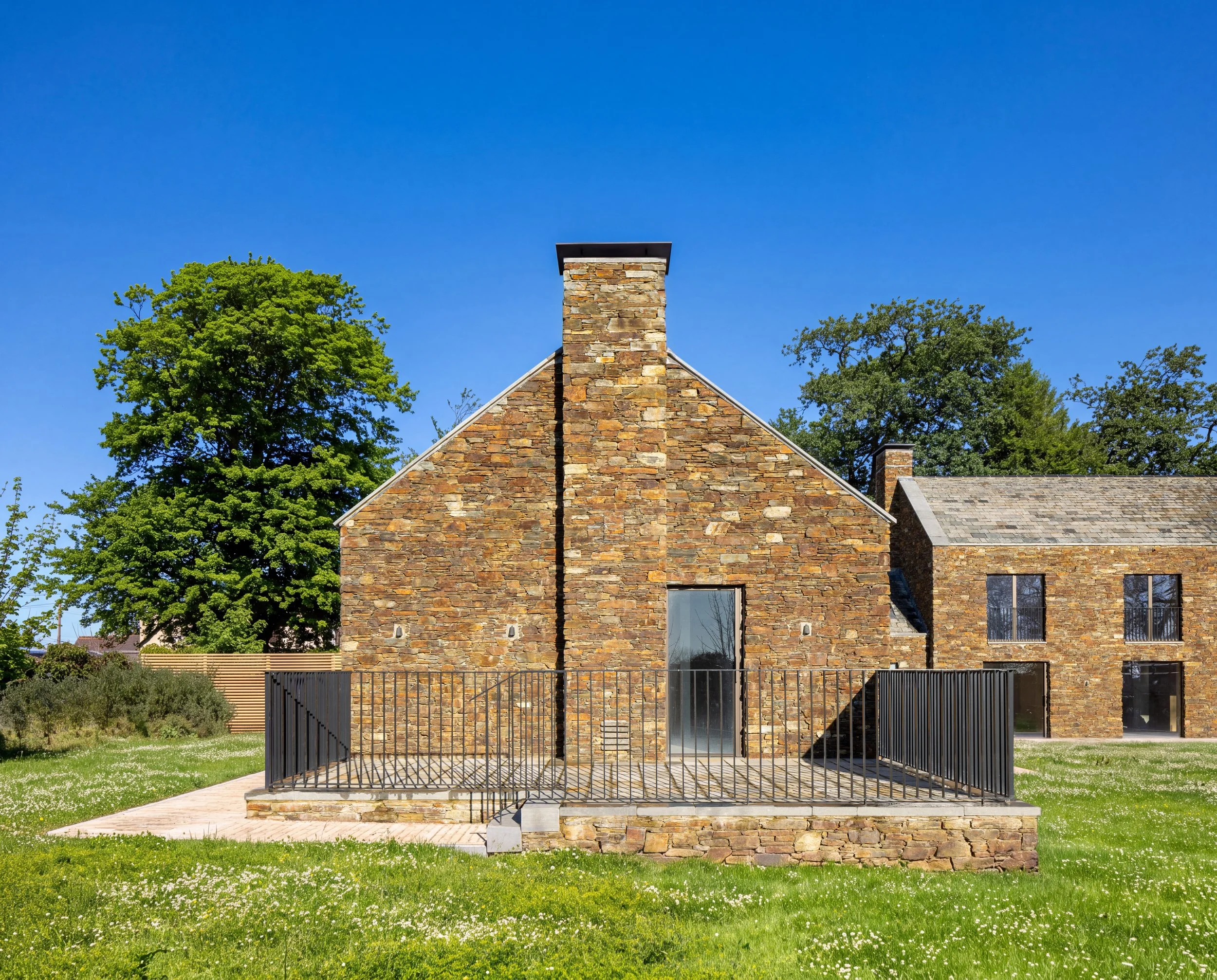
The buildings have the same weight and depth. The walls are built in back-bedded Yennadon Stone, sourced from nearby Dartmoor. The stone is laid with its irregular faces and uneven edges exposed, giving the buildings something of the character of the old hedges.

The roofs are clad in reclaimed Delabole slate, giving a material with a long history in Cornwall a second life. The slates are laid in diminishing courses, with larger pieces at the eaves gradually reducing towards the ridge. This traditional method reflects the way slate was historically worked and handled, as well as giving the roof a softer, more varied surface.

Three houses are arranged around a shared courtyard, creating a small cluster rather than one large building. The courtyard gives each home a sheltered centre, while the arrangement allows the houses to turn towards their own views and retain a sense of privacy. There is something familiar about this way of building: across Cornwall, agricultural buildings have often gathered around yards and working spaces, added to and adapted over time.
The detailing continues the same approach. Deep stone reveals and irregular quoins give the large openings a sense of weight, while allowing the contemporary windows to sit comfortably within the masonry. Uneven edges of stonework extend into the reveals, concealing the frames and making the walls feel as substantial at the openings as they do elsewhere.

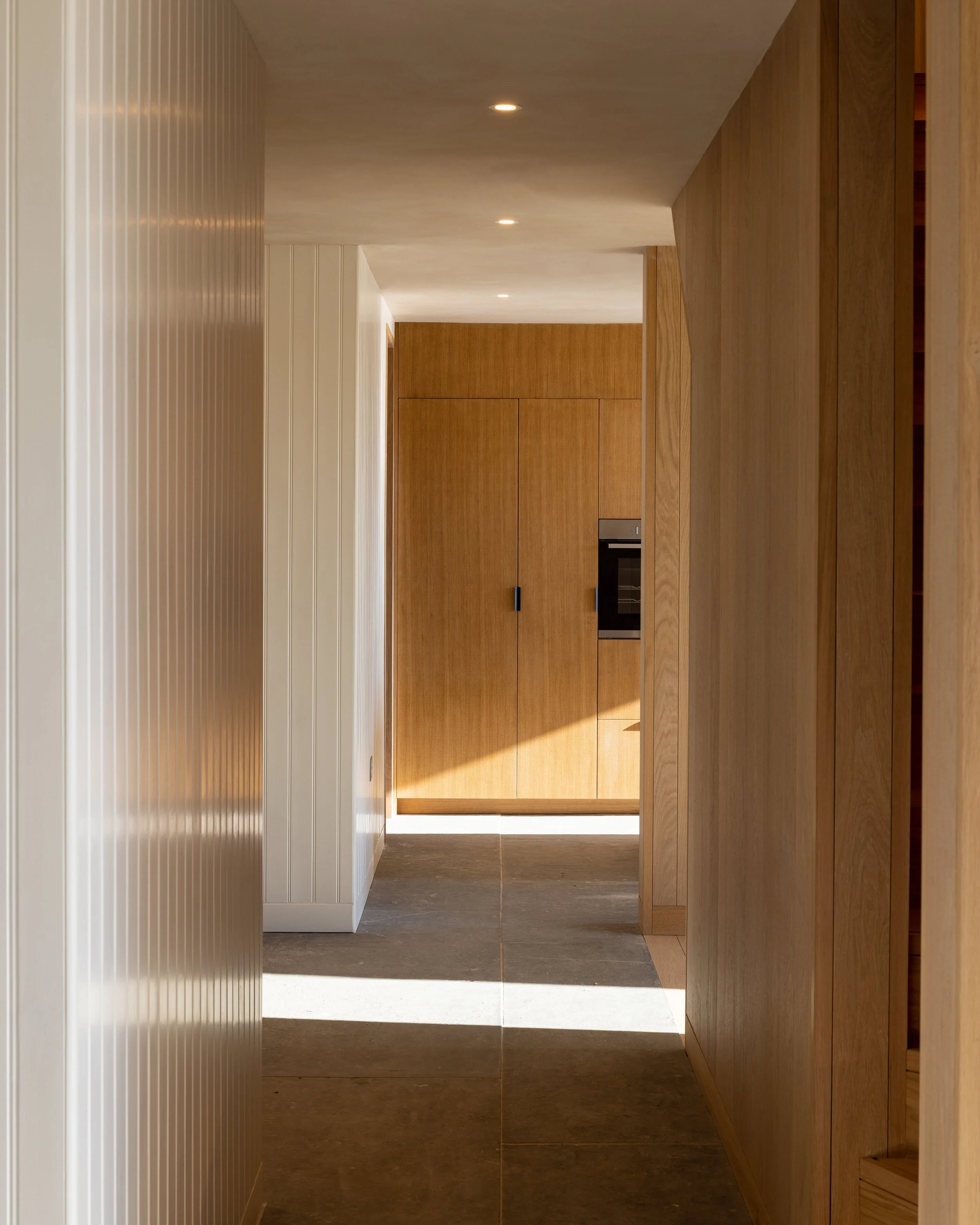
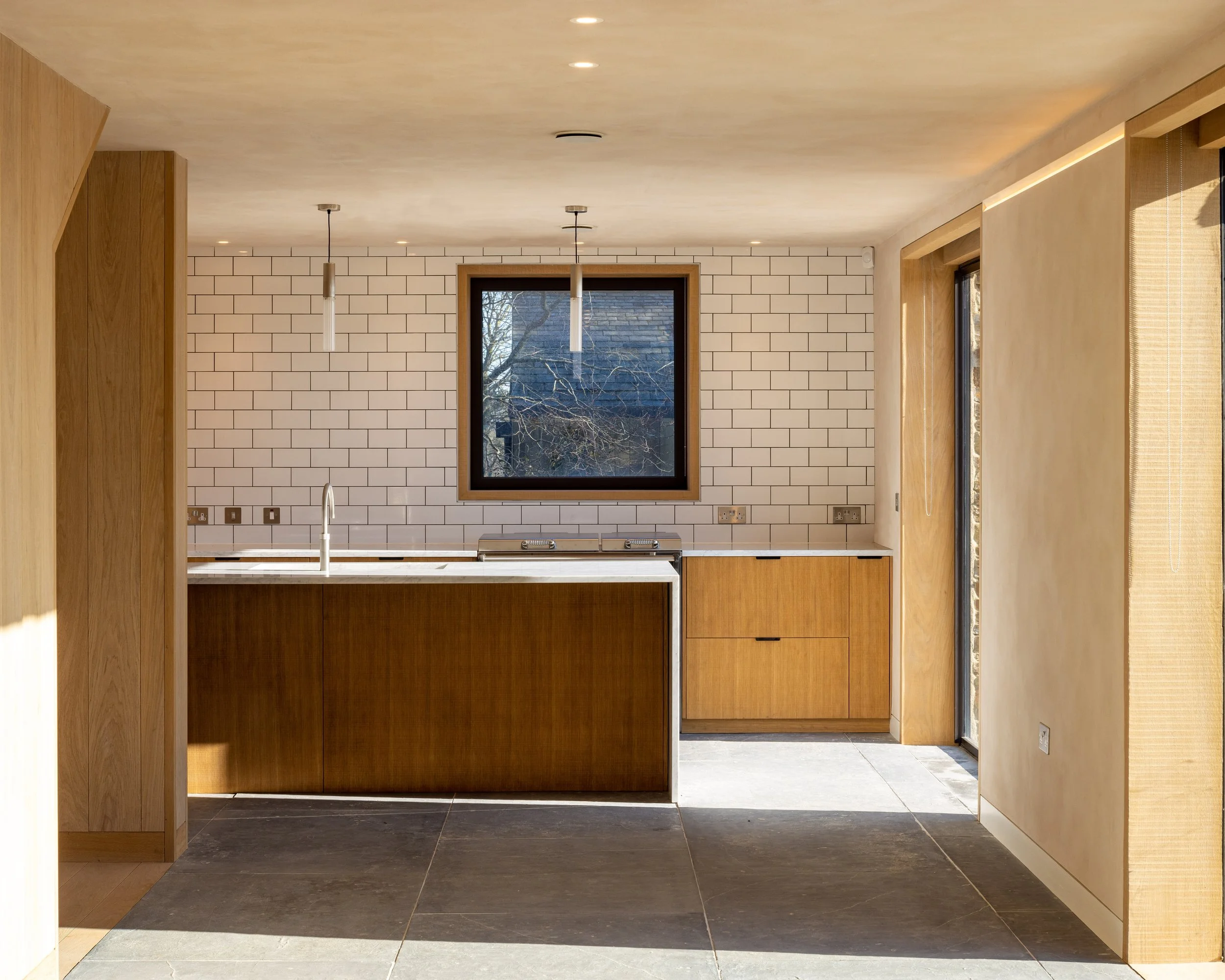
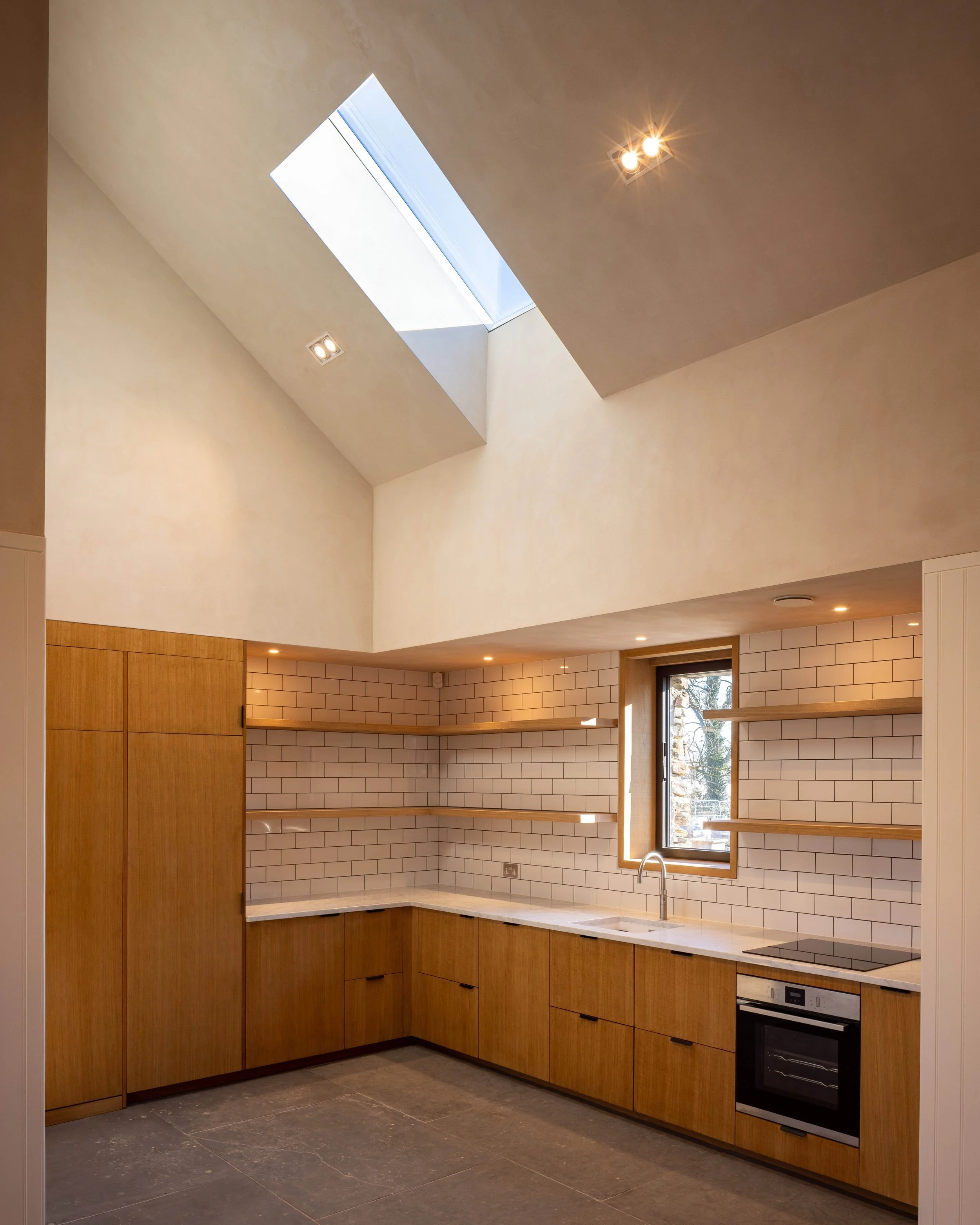
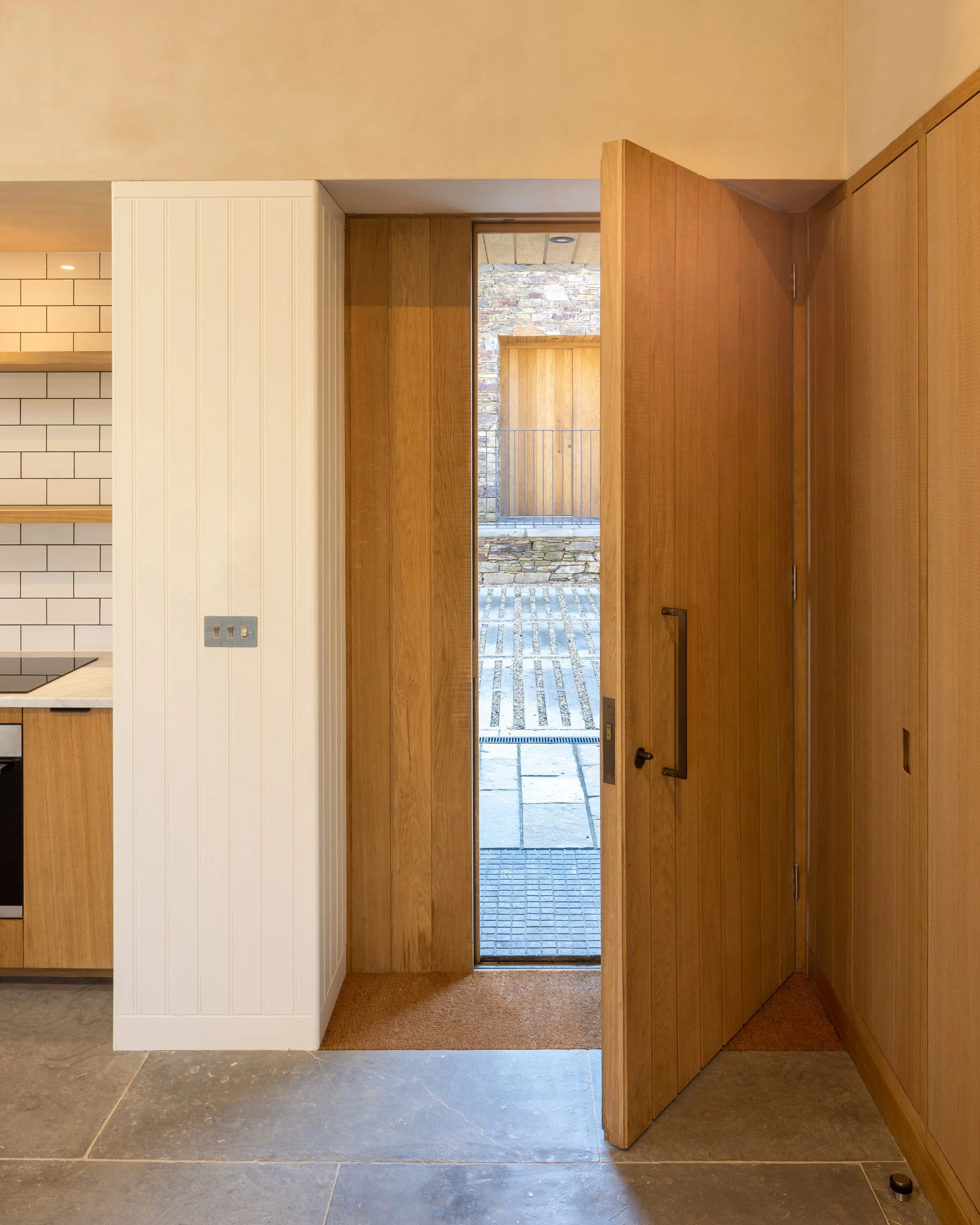
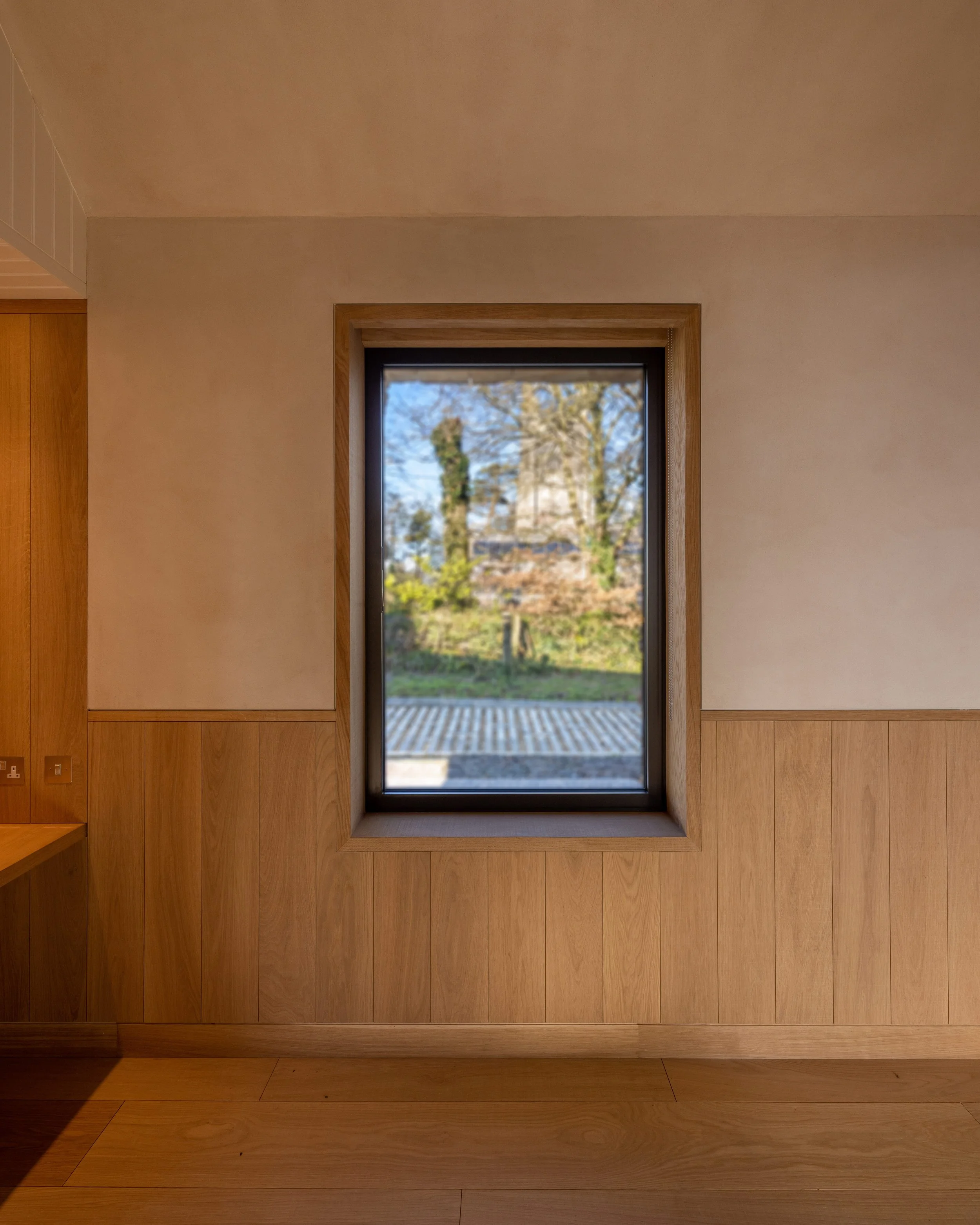
Inside, the materials remain simple and tactile. Rough-sawn oak boarding, clay plaster and natural stone are left to speak for themselves, bringing the texture and honesty of the exterior into the rooms.

The result is a group of homes that feels at home in Cornwall without trying to look old. Traditional materials, local building traditions and the particular character of the site provide the starting point, but the houses belong to the present.